

Hear from Our Customers
You can’t fix what you can’t see. That’s the problem with mold in Bucks County homes—it grows behind walls, under carpets, inside HVAC systems, anywhere moisture gets trapped.
Our professional mold testing tells you three things: whether you have mold, what type it is, and how much of it is in your air. That’s not guesswork. It’s lab-verified data from independent testing facilities that insurance companies and real estate agents actually trust.
Here’s what that means for you: no more wondering if that musty smell is serious. No more worrying whether your kids’ allergies are coming from something in the house. And if you’re buying or selling, you’ll have documentation that holds up in negotiations and claims.
Early detection saves money. The average mold remediation costs around $2,200, but if you catch it early through testing, you might be looking at a few hundred dollars in targeted treatment instead of tearing out drywall. Testing costs between $300 and $1,000 depending on your property size. What you get back is certainty.
Mack’s Mold Removal has served Bucks County homeowners for over 25 years. We’re local, certified, and we understand what happens to homes in this climate.
Lahaska gets 44 inches of rain per year—more than the national average. Add in humid summers where indoor humidity regularly hits 75-80%, and you’ve got conditions where mold can start growing within 24 to 48 hours of water exposure. We see it in basements after heavy storms, in attics with poor ventilation, around windows that leak during winter freezes.
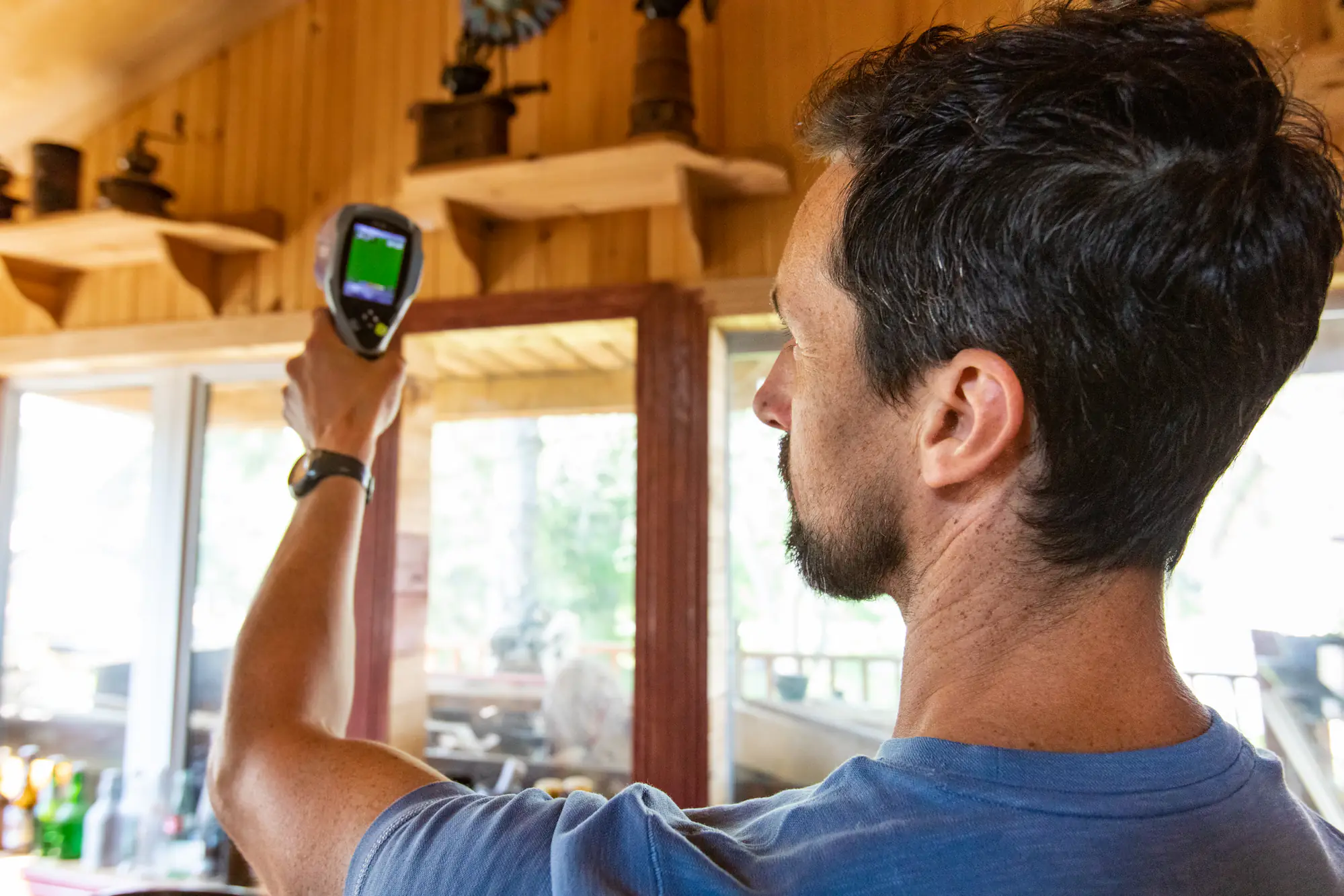
Our team uses calibrated equipment daily: thermal cameras to spot temperature differences that indicate moisture, moisture meters to measure exactly how wet your materials are, and air sampling devices that capture spores you’re breathing but can’t see. Then we send those samples to independent labs that insurance companies recognize. You get results you can actually use.
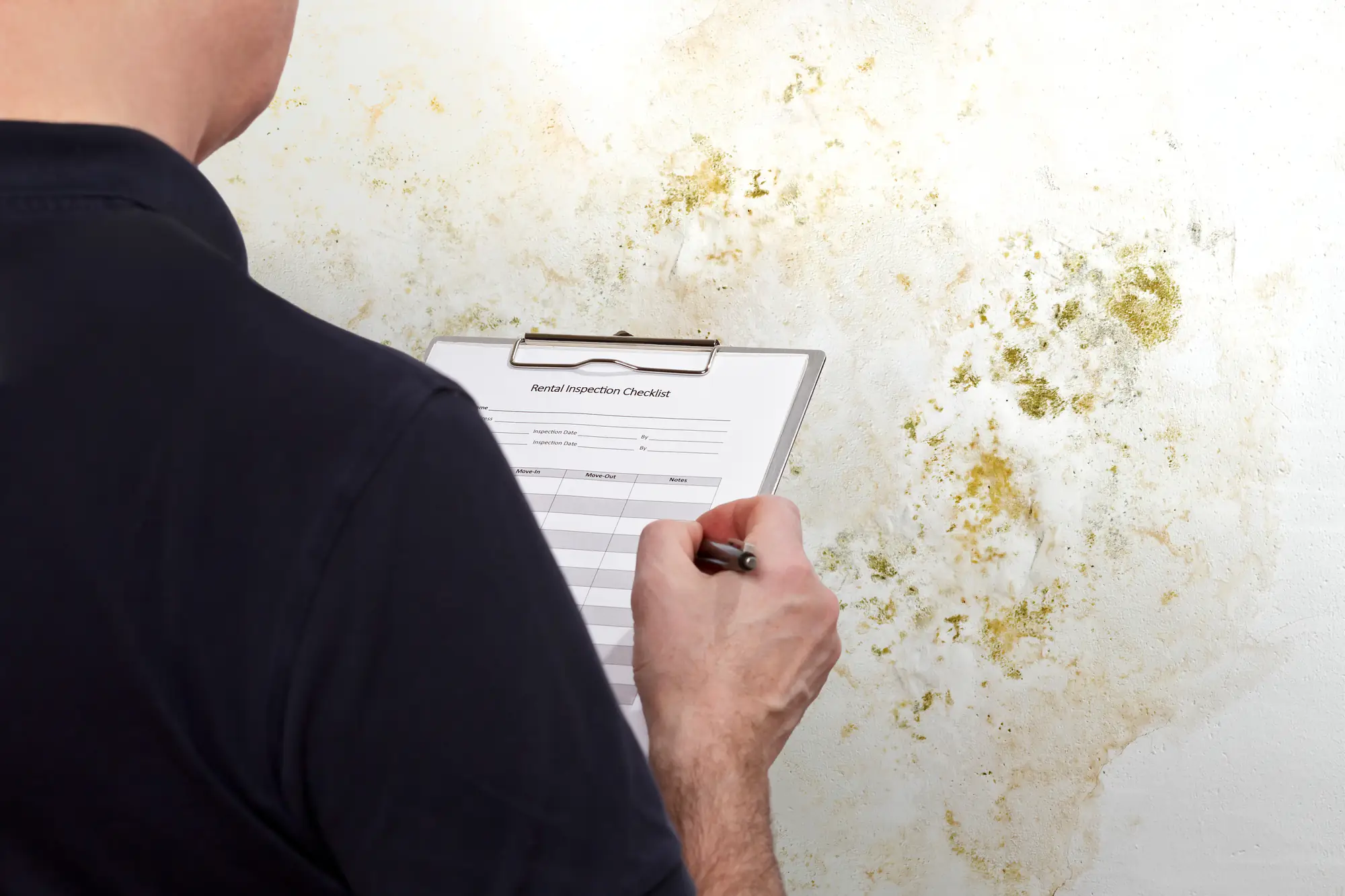
First, we walk through your property and listen. You’ll tell us what you’ve noticed—smells, stains, health symptoms, water damage. That gives us a starting point.
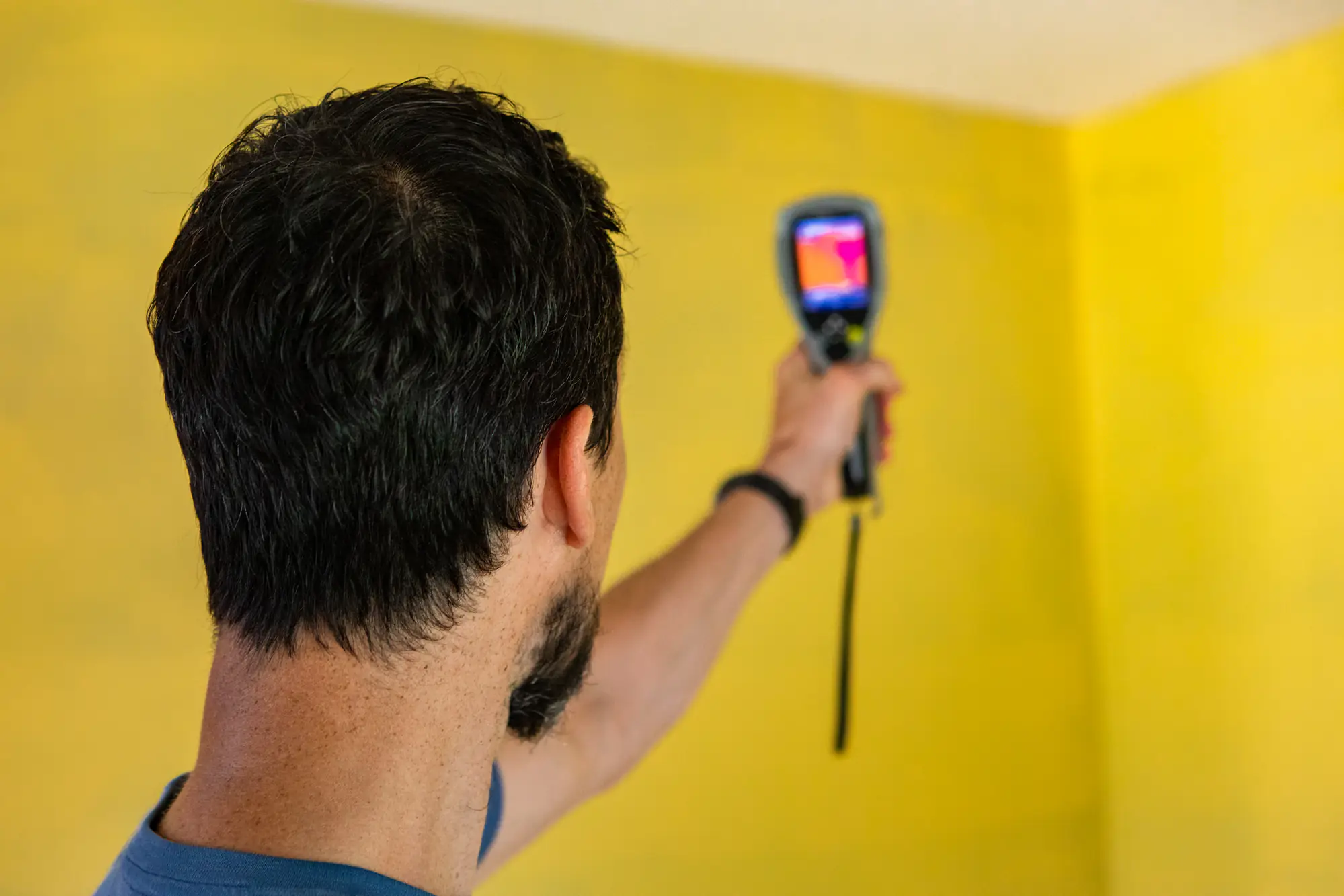
Next, we use thermal imaging cameras to scan walls, ceilings, and floors. These cameras show us temperature variations that indicate moisture or poor insulation—both conditions where mold thrives. We follow up with moisture meters that give us exact readings on wood, drywall, and concrete.
Then comes air sampling. We place collection devices in different rooms to capture airborne mold spores. We also take surface samples from any visible growth or discoloration using tape lifts and swabs. Some situations call for ERMI testing, which analyzes dust for mold DNA. We choose the right method based on what we find.
All samples go to a third-party lab. You’ll get a report within a few days that identifies mold species, spore counts, and concentration levels. We’ll walk you through what it means in plain language—whether you need remediation, where the moisture source is, and what your next steps should be.
If you don’t have mold, we’ll tell you that too. And if you do, you’ll know exactly what you’re dealing with before you spend a dollar on treatment.
Ready to get started?
You get a certified technician who shows up on time with professional-grade equipment. We’re talking thermal cameras, calibrated moisture meters, laser particle counters, and spore traps—not a flashlight and a guess.
We inspect the areas you’re concerned about, plus the places most homeowners don’t think to check: crawl spaces, attic insulation, behind water heaters, under sinks, around HVAC returns. Mold grows where air doesn’t move and moisture sits. We know where to look in Bucks County homes because we’ve been in hundreds of them.
Your inspection includes air quality testing and surface sampling where needed. Those samples get analyzed by an independent lab that’s nationally recognized for accuracy. You’ll receive a full report that breaks down what was found, where it was found, and what the concentration levels mean for your health and property.
We also give you a moisture map. That’s a breakdown of where water is getting in or condensing—the root cause of your mold problem. Knowing that helps you prevent it from coming back, whether that means fixing a gutter, adding ventilation, or sealing a foundation crack.
And yes, the initial inspection is free. We’ll assess your situation, explain what testing makes sense, and give you a clear price before we collect a single sample.
Most residential mold testing in Bucks County runs between $300 and $1,000, depending on your home’s size and how many samples we need to collect. A small condo with one area of concern will cost less than a 3,000-square-foot home where we’re testing multiple rooms and the HVAC system.
We offer a free initial inspection. That means a certified technician comes out, evaluates your situation, and tells you what testing is necessary before you commit to anything. Some situations only need a visual inspection and moisture readings. Others require air sampling, surface testing, or ERMI analysis to get a complete picture.
Here’s the thing: testing costs a few hundred dollars now, but catching mold early can save you thousands in remediation. The average mold removal job costs around $2,200. If testing helps you address a small problem before it spreads behind walls or into your HVAC system, you’re looking at a fraction of that cost. And if you’re buying or selling a home, professional testing can protect a deal worth hundreds of thousands of dollars.
We use several methods depending on what your property needs. Air sampling captures mold spores that are floating in your indoor air—the ones you’re actually breathing. We place spore traps in different rooms, pull air through them, and send the samples to a lab that identifies species and counts concentrations.
Surface testing uses tape lifts or swabs to collect visible mold growth or discoloration from walls, ceilings, wood, or other materials. This tells us exactly what’s growing and whether it’s a species that produces mycotoxins. We also use direct fungal exams for quick identification of problem areas.
For more comprehensive analysis, ERMI testing examines dust samples for mold DNA. This method can detect mold that’s no longer actively growing but has left behind spores and fragments. It’s especially useful in homes with ongoing health symptoms where the source isn’t obvious.
We also use thermal imaging and moisture meters during every inspection. These tools don’t test for mold directly, but they show us where conditions are right for growth—hidden leaks, condensation, poor ventilation. Finding the moisture source is just as important as finding the mold, because that’s what you need to fix to prevent it from coming back.
The on-site inspection usually takes one to two hours, depending on your property size and how many areas we’re testing. We’re not rushing through with a checklist. We’re scanning walls with thermal cameras, taking moisture readings, setting up air sampling equipment, and collecting surface samples where needed.
Air samples need to run for a specific amount of time to capture an accurate reading—usually several minutes per location. If we’re testing multiple rooms or your HVAC system, that adds time. But we work efficiently, and most homeowners are surprised how thorough we can be in under two hours.
Lab results typically come back within three to five business days. The lab is analyzing samples for mold species, spore counts, and concentration levels. That’s not something you can rush if you want accurate results. Once we have the report, we’ll call you to walk through the findings and explain what they mean in plain language.
If you need results faster for a real estate closing or insurance claim, let us know upfront. We can sometimes expedite lab processing for an additional fee, though that’s not always necessary. Most situations can wait a few days for accurate results rather than rushing to a wrong conclusion.
You can buy DIY mold test kits at hardware stores for $10 to $50, but they won’t tell you much. Most of them just confirm that mold spores are present—which they are in every home. Mold spores are everywhere. The question isn’t whether they exist, it’s whether you have an active growth problem and what species you’re dealing with.
Professional testing uses calibrated equipment and controlled sampling methods. We’re measuring spore concentrations in your air and comparing them to outdoor baseline levels. We’re identifying specific species—some are harmless, others produce mycotoxins that cause serious health problems. And we’re documenting everything in a format that insurance companies and real estate agents will actually accept.
DIY kits also can’t find hidden mold. They test the air or surface right where you place them, but they won’t locate mold growing inside your walls, under your floors, or in your HVAC ducts. We use thermal cameras and moisture meters to find those hidden problems before they spread.
Here’s the bigger issue: mold grows in places that are hard to reach and easy to miss. If you’re testing the wrong area or using the wrong method, you’ll get results that don’t reflect the actual problem. Then you’re either ignoring mold that’s making you sick, or you’re paying for remediation you didn’t need. Professional testing eliminates that guesswork.
First, don’t panic. Finding mold doesn’t mean your house is ruined. It means you have information you can act on. The lab report will tell you what species was found, where it was found, and what the concentration levels are. Some mold requires immediate remediation. Other findings might just need better ventilation or a dehumidifier.
We’ll walk you through the results and explain what they mean for your specific situation. If you need remediation, we’ll give you a clear scope of work and a price. That might involve removing contaminated materials, treating surfaces with antimicrobial solutions, running air scrubbers to remove airborne spores, and fixing the moisture source so mold doesn’t come back.
You’ll also want to address the underlying problem. Mold doesn’t grow without moisture. Whether it’s a leaky roof, a foundation crack, poor ventilation, or a plumbing issue, that needs to be fixed. Otherwise, you’re just treating symptoms, and the mold will return.
If you’re dealing with a real estate transaction, the test results give you documentation for negotiations. Sellers can use it to show they’ve addressed the problem professionally. Buyers can use it to request repairs or price adjustments. Either way, you’re working with facts instead of assumptions. And if you’re filing an insurance claim, professional testing provides the evidence adjusters need to process your case.
Bucks County’s climate creates near-perfect conditions for mold growth. We get 44 inches of rain per year—well above the national average. Humid summers push indoor humidity to 75-80% without dehumidification. And temperature swings between seasons create condensation in basements, attics, and poorly insulated spaces.
Mold needs three things: moisture, organic material, and temperatures between 60 and 80 degrees. Your home provides all three. Drywall, wood framing, insulation, carpet, and even dust contain organic material that mold feeds on. And unless you’re running climate control year-round, most homes stay in that temperature range.
Water intrusion is common here. Heavy storms overwhelm gutters and cause basement seepage. Older homes have foundation cracks that let groundwater in. Ice dams form on roofs during winter and force water under shingles. Condensation builds up in attics with poor ventilation. Any of these situations can start mold growth within 24 to 48 hours if the materials don’t dry out completely.
That’s why regular testing makes sense in this area, especially if you’ve had any water damage, if you’re noticing musty odors, or if anyone in your home is experiencing unexplained respiratory symptoms. Catching mold early—before it spreads and before it affects your health—saves you money and stress. And in a climate like ours, it’s not a matter of if moisture gets in, it’s a matter of when and whether you catch it in time.
Other Services we provide in Lahaska